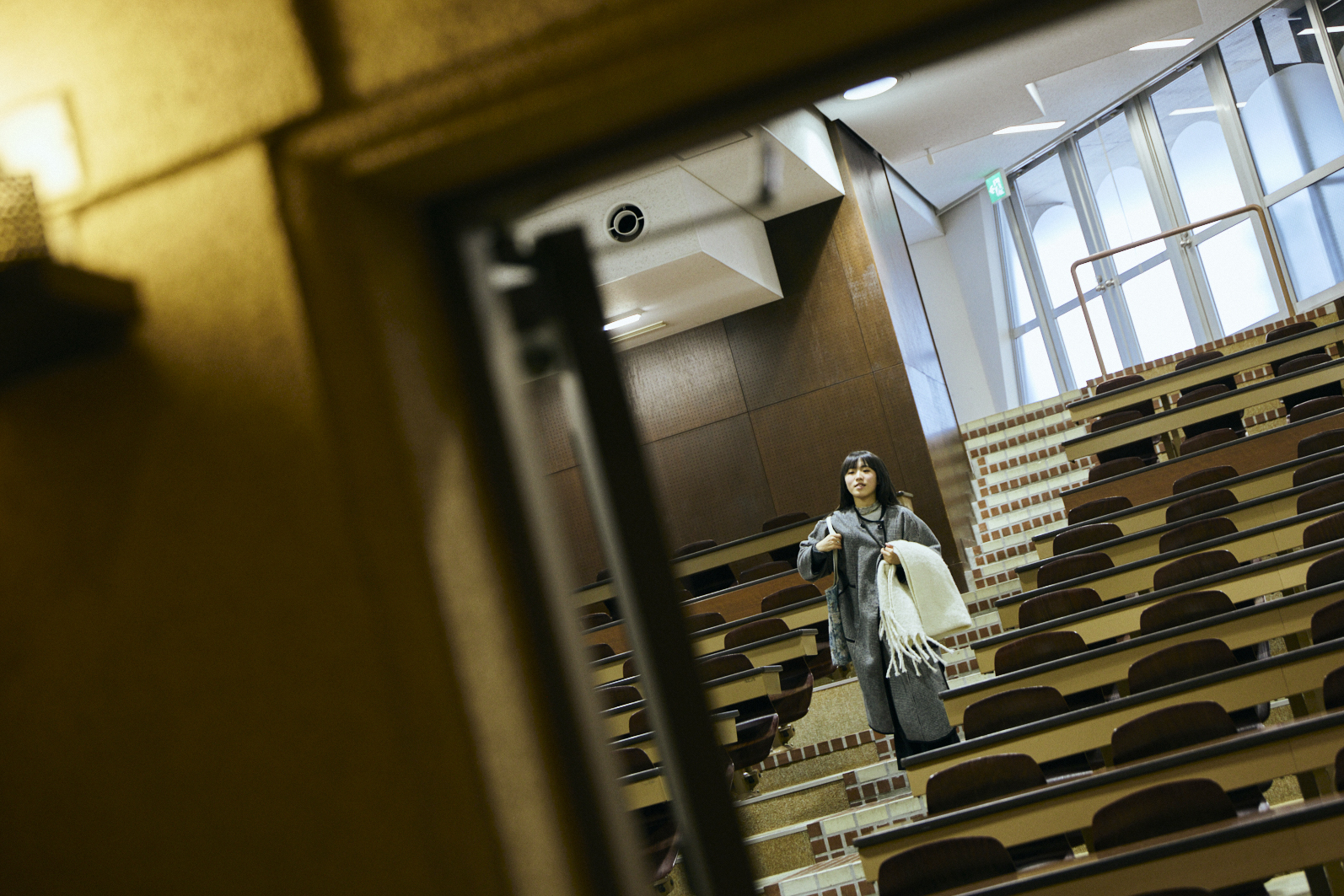
From a Desire to Support Those in Need
Since childhood, Rino Tachibana has loved children and actively cared for those around her. While studying in the Department of Education and Child Development with the goal of becoming someone who can lend a helping hand to children, she also confronted the social issue of period poverty through the Menstrual Products Project, ultimately achieving her goal of installing menstrual products in university restrooms. What did Ms. Tachibana, who takes action for those in need, learn through her department and this project?
Rino Tachibana
Fourth-year student, Department of Education and Child Development, Faculty of Psychology
Originally from Kanagawa Prefecture. She enjoys watching television dramas and, regardless of genre, reflects on their direction and underlying messages. Her favorite work is Nobuta wo Produce. She has also been collecting the packaging of Puré Gummy candy since her first year of university.
I Want to Study in Order to Support Children
I have loved taking care of younger children since I was little. My family tells me that when I was two years old, I was already looking after a one-year-old child I met outside. Through interacting with children, I have often seen them struggle with worries they could not resolve on their own. Gradually, I became more aware of what they might be thinking and what they were struggling with, and my desire to support and empower children and to be involved in work with them continued to grow. By the time I became a college student, I knew I wanted to study education and learn how to work with children.
In the Department of Education and Child Development, there are many classes designed to prepare students to become teachers. At first, I did not intend to become a teacher, as I wanted to support children outside the school setting, so I was not very engaged in those courses. However, through the required curriculum, I learned about the meaning and purpose of studying various subjects and about how to nurture children’s growth, which gave me many new perspectives. It also allowed me to reflect on my own student life and realize, “So this was the purpose behind it.”
Supporting Rather Than “Teaching” or “Telling”
I decided to obtain an elementary school teaching license because I felt it was important, in order to work with children in the future, to gain the necessary perspective and to understand how children spend their time within the school as a kind of society, as well as how teachers manage and operate that environment.
Moreover, I found it appealing that although the faculty is classified as a science faculty, in addition to mathematics the entrance exam focused on English and Japanese—subjects typically associated with the liberal arts track. That realization made me feel as though my options had suddenly opened up. With that encouragement, I was ultimately accepted, and I enrolled without hesitation.
I just completed my teaching practicum in November, and it was a very valuable experience to witness children growing through their interactions with one another. Children are far more capable than we tend to think. They develop on their own and learn from those around them. They grow by recognizing and affirming one another. I came to realize that, rather than “teaching” or “telling,” perhaps our role as adults is to support children so that they can continue to grow.
Taking Action on and Realizing the Menstrual Products Project
When I was in junior high school, I saw friends who, unlike me, felt unwell during their periods, and I struggled with the question, “What can I do when I can’t fully understand the pain and discomfort they experience?” As I wrestled with that unease, it occurred to me that even if I was not directly affected, perhaps I could help by improving the surrounding environment. Later, in high school, I encountered the term “period poverty” in a newspaper article. Overseas, menstruation is sometimes treated as taboo, leading to the exclusion of those who menstruate or forcing them into unsanitary conditions that harm their health. Even in Japan, there is the reality that it can be difficult to speak openly about menstruation, and that some people face financial hardship.
While wanting to do something related to menstruation, I found a group called “Voice Up Japan MGU” (now “Be the light MGU”) around June of my first year at university. The organization aimed to create an environment where Meigaku students could raise their voices about social issues. Around the time I joined, the group had just been selected for the Volunteer Fund Student Challenge and had begun the Menstrual Products Project, which involved installing menstrual products in two locations on the Yokohama campus. I took part in setting up and replenishing the products and counting how many were used. It was challenging to distribute menstrual products to restrooms scattered across the large campus between classes. I also remember struggling as we worked through trial and error to establish a system for tracking usage and refining the project’s overall operation.
Toward Submitting a Proposal to the University
The ultimate goals of this project were to have the University install menstrual products in its restrooms and to create an environment where menstruation could be discussed openly and comfortably. During the first year, although we were able to install menstrual products, we were unable to gather the supporting materials, things like concrete usage data and student survey results, that we needed to submit a formal proposal to the University. So in our second year, one of our goals was to properly collect such data.
I began serving as the project leader in my second year. We revised the methods for recording distribution and usage numbers so we could collect reliable data. However, this created a heavy burden for other members, and in the end, only a few of us were managing the project.
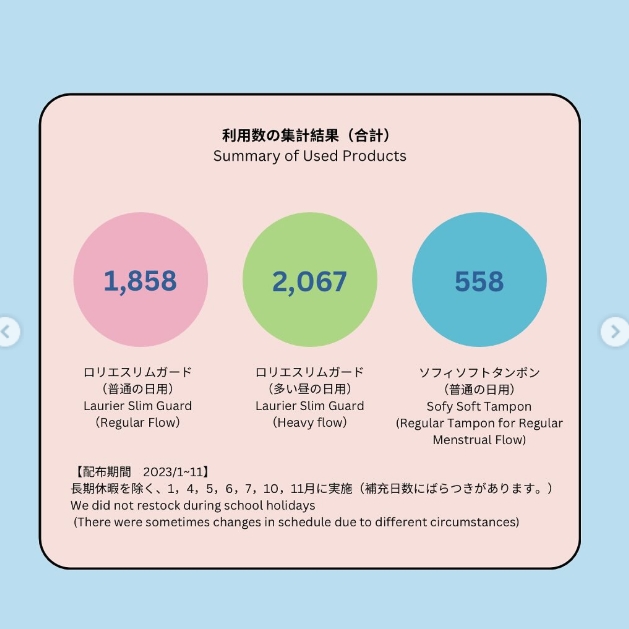
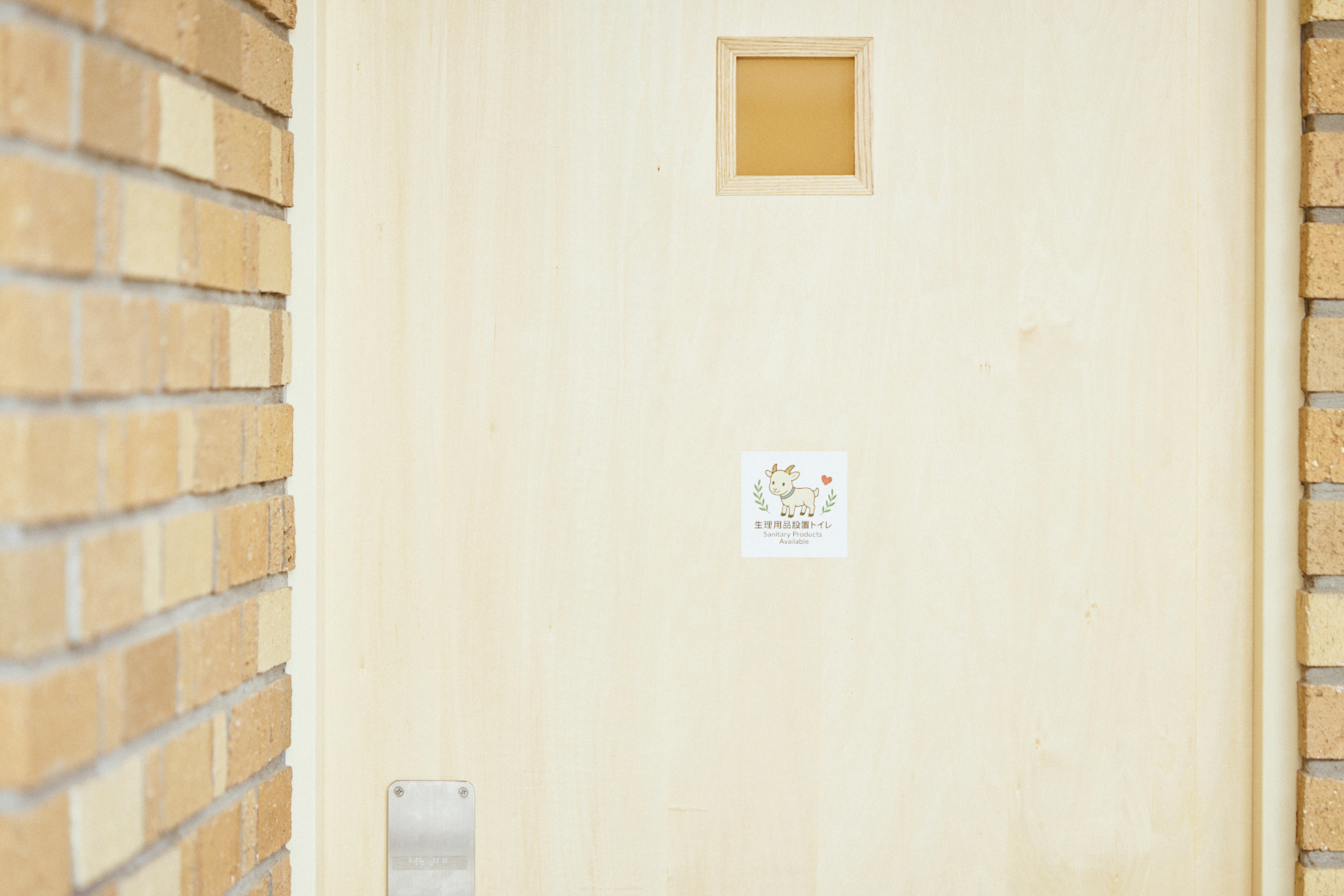
The summary of Used Products
When I became a third-year student and began preparing the proposal for submission to the University, we received support from the Volunteer Center staff. Since there were few precedents for students submitting formal proposals to the University, we worked through trial and error with University staff to determine what content to include, gradually shaping the document.
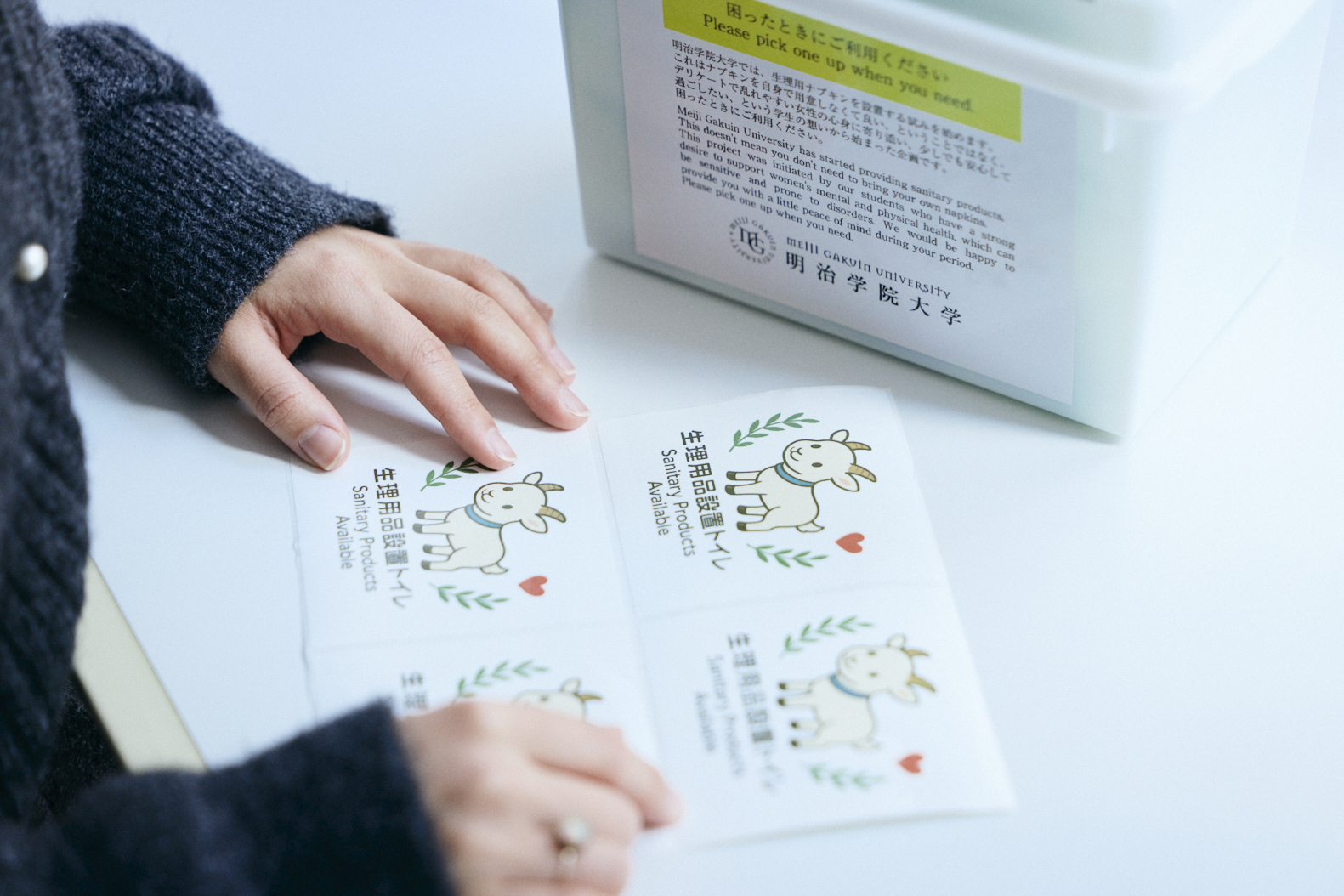
Among the survey responses collected in the project’s second year were comments such as, “Having menstrual products available really helped,” and “I wish they were available on the Shirokane Campus as well.” Friends also told me, “I saw that they were installed,” and “We were talking about how helpful something like this is.” Learning that various voices were being heard and that conversations about menstruation were taking place made me feel that our activities truly had meaning. Encouraged by these user responses and the support of the Volunteer Center staff, we were able to complete and successfully submit the proposal in March 2025, and beginning in October, menstrual products were installed in restrooms on both the Yokohama and Shirokane campuses.
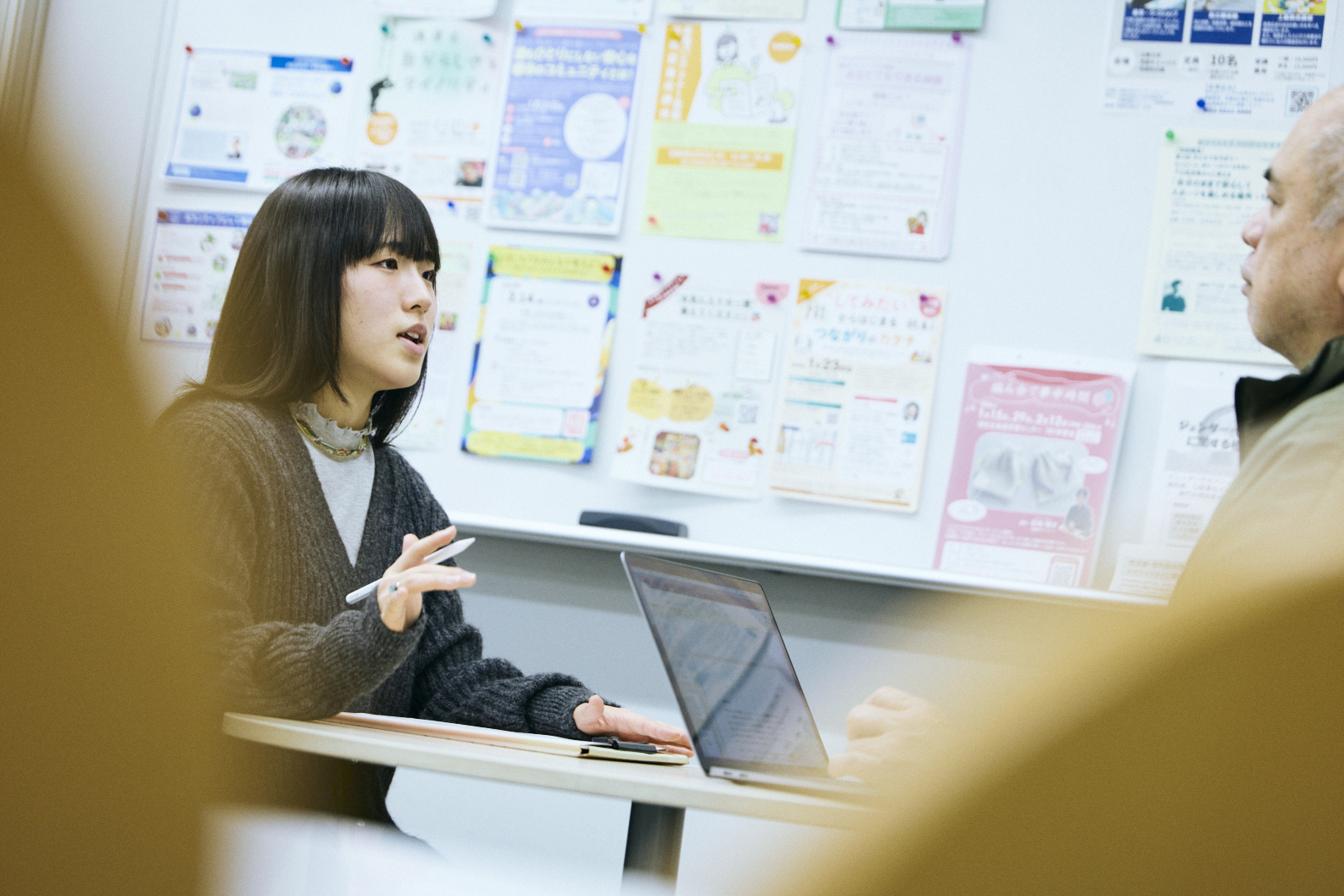
Although I was able to achieve my long-held goal of having menstrual products installed, I also have some regrets. I should have involved more people in the process. In addition to the installation itself, I took the lead on planning events and promotional activities, but there were aspects that did not go smoothly. I feel that we were able to see the project through to the end and achieve University-wide installation only because of the ideas and support of the Volunteer Center staff and senior students. Through this experience, I realized that when there is something you truly want to accomplish, working together with people who share the same passion and relying on those you can count on leads to better results than trying to do it alone.
My Message to High School Students and Prospective Applicants
I encourage you to share your thoughts with others. By speaking about them, you may come to new realizations about your own ideas, and by hearing others’ perspectives, your horizons can broaden even further. If there is something you truly want to achieve, I believe it is important not to carry that burden alone. It is also essential to have people you can talk to about your concerns. When you have multiple people you can consult, you can choose whom to speak with depending on the situation, gain diverse perspectives, and move forward. Through my student life and the Menstrual Products Project, I learned the importance of relying on others instead of trying to handle everything on my own. By depending on and supporting one another, I believe we can overcome even unexpected challenges.
I Want to Create a “Place of Belonging” for Children
After graduation, I plan to work in education. Through my teaching practicum at an elementary school and my volunteer work as a support aide, I have seen children who fall behind in class and struggle to keep up. I want to engage carefully and thoughtfully with those children as well. Eventually, I hope to become someone who can listen to children who are carrying worries. My dream and the guiding theme for my future is to create a space where children can drop by freely and talk about even the smallest things, a place they can truly feel is their own.