
Department of Social Work
Department of Sociology
Department of Social Work
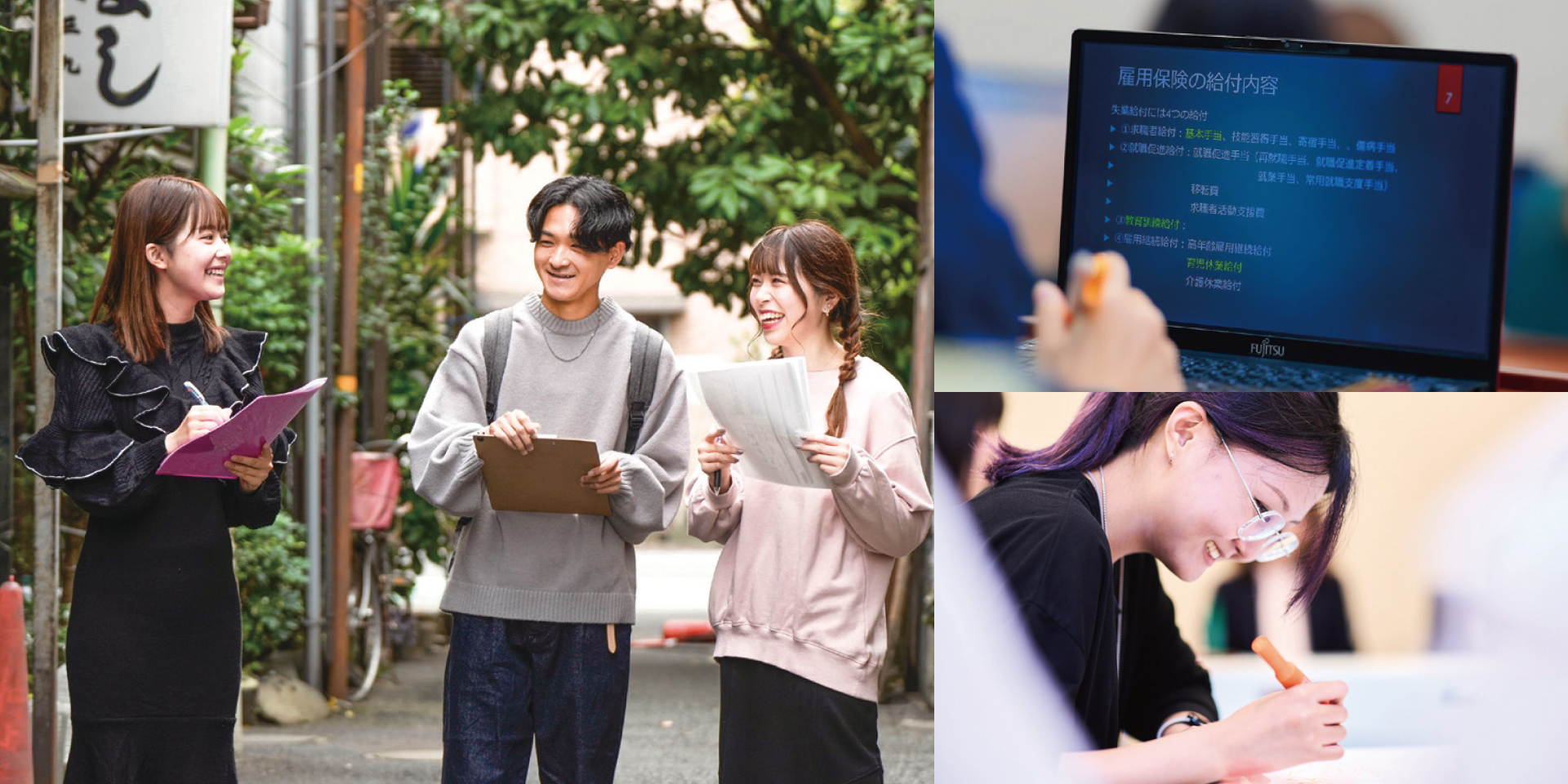
Learning about social work for a new era via two future-oriented courses
Social work plays an increasingly important role in contemporary society, which values diversity and respect for the individual. Students in the Department of Social Work approach the experiences of those who are discriminated against or oppressed from the perspectives of human rights and social justice. They analyze the social structures that make life difficult for such individuals and learn how to bring about change in individuals, communities, and society to resolve these issues.
Department of Social Work
Key Features of the Department of Sociology
Program Structure
Topics
Admission Policy
Key Features of the Department of Social Work
Point 01
Education in a department proud of its history and traditions
The Department of Social Work was established at a very early stage in Japan as a department specializing in social services. For nearly a century, the Department has produced many practitioners in the fields of welfare and government, and has contributed to the development of social welfare in Japan. Students benefit from internships and practical training supported by alumni who play an active role in a diverse range of welfare fields.
Point 02
Two courses of education open up career paths
Students choose which course they will join after admission to the University. The Social-work Course prepares students to obtain national licensure as certified social workers or mental health workers and to become professionals in the field. The Welfare Development Course focuses on NPO and corporate social contributions, well-being, international assistance, and multicultural coexistence. Students in the Welfare Development Course can obtain teaching licenses for special-needs schools and/or general junior and senior high schools.
Point 03
Confronting global and local social issues
We approach new social issues that are now attracting a lot of attention, such as multicultural coexistence, international assistance, support for young people in connection with hikikomori (social withdrawal), isolation and educational disengagement, and the use of AI and ICT in social welfare, and consider ways to promote understanding of the people concerned while also providing them with support.
Point 04
An abundant array of practical courses
The Department of Social Work offers more practical courses than any other department. These include practical training in social work, welfare development fieldwork (domestic and international), field studies (in South Korea), practical social welfare research, internships unique to our department, and practical training in education. In each of these programs, students reflect on the issue of self-reliance and assistance with supporters and stakeholders, visiting innovative activists and organizations to learn about the values that drive these initiatives.
Program Structure
In their first year, students study how people connect with society and basic approaches to this subject. In their second year, students choose between the Social-work Course and Welfare Development Course, setting the direction of their studies. From that point, they engage directly with people and society through such means as practical training, fieldwork, and overseas field study, and choose specialized seminars with an eye to their career path after graduation.
Topics
Understanding Support for Young People
-Understanding the challenges faced by young people and thinking about how to provide them with support
In Understanding Support for Young People A, students learn about historical transitions in adolescence and the current implementation of support for young people. Understanding Support for Young People B focuses on hikikomori (social withdrawal). Students learn about the experiences of the young people and their families, and approaches to support them, acquiring specialized knowledge and multifaceted support perspectives to gain a structural grasp of the challenges faced by young people.
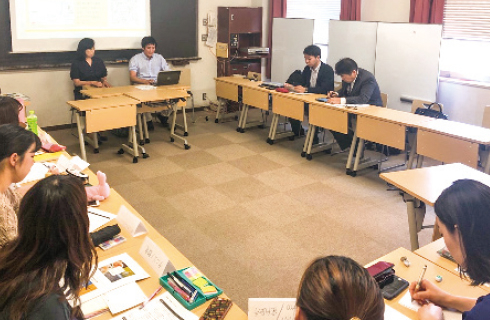
International Social Welfare 1, 2
-Social welfare challenges, support and learning transcend national frontiers
Students do not only learn about social welfare in Japan. International Welfare Theory 1 takes Europe as an example of advanced welfare states, and students learn about social welfare and social security in various countries. International Welfare Theory 2 focuses on developing countries and foreigners living in Japan. Students learn about social welfare, social work, and multicultural societies to acquire glocal knowledge and perspectives.